







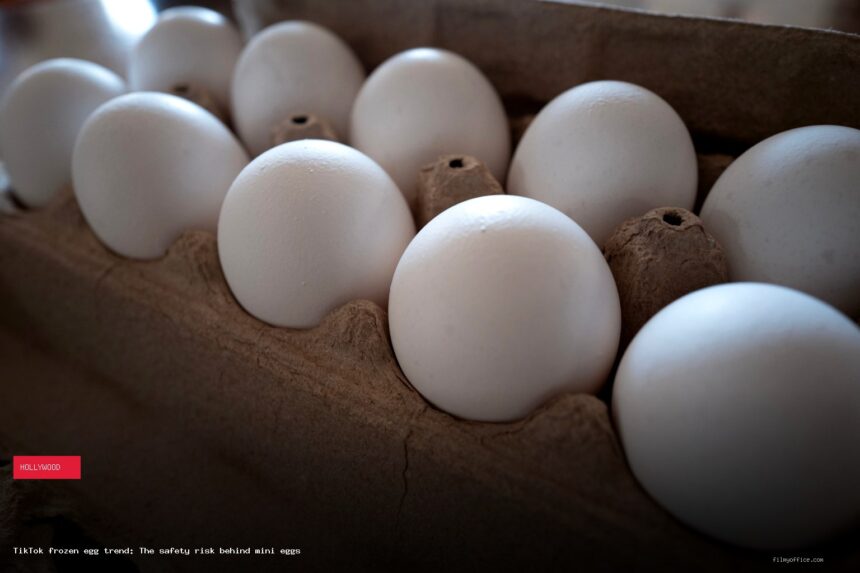
Quick answer: The FDA and USDA warn against TikTok’s frozen egg trend, which involves freezing whole eggs in their shells, slicing them and frying miniature portions. Freezing can crack shells and allow bacteria to enter, while bacteria already present can survive freezing and cause foodborne illness.
The TikTok frozen egg trend turns whole eggs into tiny fried portions, but the viral kitchen hack has drawn warnings from the FDA and USDA. Both federal food safety agencies caution against freezing eggs in their shells, the step at the heart of the videos, and say the method should not be attempted at home.
The process looks simple on screen: users freeze a whole egg inside its shell, slice the frozen egg and fry the pieces into miniature eggs. The trend has resurfaced after earlier waves attracted millions of views. Its visual appeal, however, comes with a food safety concern that a quick cooking clip may not make obvious.
Why freezing an egg in its shell creates a risk
The problem begins with what happens inside the shell. Liquids expand when frozen, and that expansion can cause an eggshell to crack. Those cracks can compromise the protective barrier around the egg, allowing bacteria to enter.
A visibly broken shell is not the only concern. Cracks may not be apparent, so an egg that looks intact after freezing can still have a compromised barrier. The agencies’ warning concerns the freezing method itself, not simply whether the finished miniature eggs look appealing.
There is another distinction behind the caution: freezing does not kill bacteria already present. Bacteria on or inside an egg before it goes into the freezer can remain when it comes back out. Freezing preserves food; it does not sterilize it.



What the salmonella warning means
Contaminated eggs can lead to foodborne illness, including salmonella infection. The FDA explains: “Salmonella are a group of bacteria that can cause gastrointestinal illness and fever called salmonellosis.”
The effects can vary. Some people may not develop symptoms, while others can become seriously ill. That makes the potential consequences more significant than an unsuccessful recipe or a disappointing result in the frying pan.
Children, older adults, pregnant people and people with weakened immune systems face a higher risk. For those groups, the safety concerns surrounding this kitchen hack are especially relevant. The fact that an egg has spent time in a freezer does not remove the bacterial concern.
A viral result is not a safety check
The miniature fried eggs are the part viewers see at the end of the process. The concerns identified by the FDA and USDA start earlier, with expansion inside the shell and the possibility of bacterial contamination. Neither a neat slice nor an intact-looking shell resolves those concerns.



The warning is specific: do not try the trend’s method of freezing whole eggs in their shells. The essential takeaway is that the freezer cannot be relied on to make an egg bacteria-free, and shell damage may not be visible. A shareable breakfast result does not change either fact.
Frequently Asked Questions
What is the TikTok frozen egg trend?
The trend involves freezing whole eggs in their shells, slicing the frozen eggs and frying the pieces into miniature eggs. The method has resurfaced on TikTok after gaining millions of views in earlier waves.
Why do the FDA and USDA warn against freezing eggs in their shells?
Liquids expand during freezing, which can crack eggshells and compromise the protective barrier that helps keep bacteria out. The cracks may not be visible, and both agencies warn against attempting the hack at home.
Does freezing eggs kill salmonella?
Freezing does not kill bacteria already present in an egg and does not sterilize it. Contaminated eggs can cause foodborne illness, including salmonellosis, with higher risks for children, older adults, pregnant people and people with weakened immune systems.