







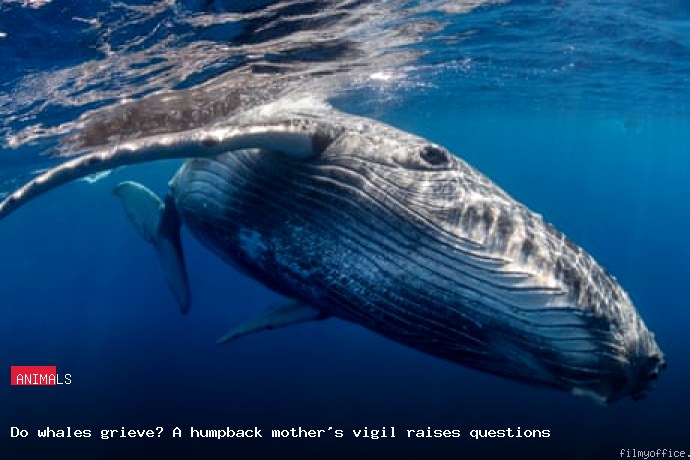
Quick answer: Underwater footage off Australia’s Gold Coast captured a humpback mother repeatedly touching and resting beside a stillborn calf for more than an hour. Research described by Olaf Meynecke suggests the behaviour could represent grief, but maternal attachment, confusion or instinctive caregiving remain possible explanations.
Do whales grieve? Underwater footage of a humpback mother repeatedly returning to her dead newborn off Australia’s Gold Coast offers a rare glimpse of how these highly social animals respond to death. The encounter suggests a possibility, not a settled answer: the behaviour could reflect grief, but other explanations remain.
The newborn calf lay motionless on the seafloor, about a kilometre offshore. For more than an hour, its mother returned to the same spot, gently touching the calf with her head and pectoral fin.
She also rested beside the calf, eye-to-eye. Those repeated visits and moments of physical contact are the central observations in an encounter captured on underwater video.


What the underwater footage shows
Research described by Olaf Meynecke suggests the encounter is the first described case of a humpback whale mother caring for her deceased newborn calf. That is a specific finding about a documented interaction, rather than a claim that this was the first time such behaviour had ever occurred.
The calf is identified as stillborn in the account. The footage records the mother’s behaviour beside the deceased newborn, including her repeated returns, gentle touches and time spent resting alongside it.
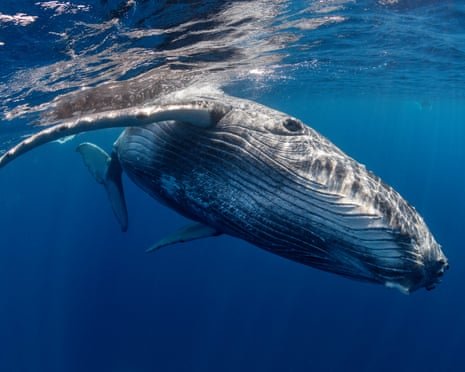
The encounter provides a window into an aspect of whale behaviour that remains poorly understood: responses to death. Humpbacks are highly social animals, but observing what a mother does beside a dead calf is not the same as establishing what she feels.
Why grief is not the only explanation
Meynecke sets out the uncertainty plainly: “The behaviours we observed could represent grief, but they could also reflect maternal attachment, confusion or instinctive caregiving”. Those possibilities matter when interpreting a scene that can appear recognisably mournful to human viewers.
The observed contact supports a description of continued care. It does not, by itself, distinguish grief from attachment or an instinctive effort to care for a newborn.
Humpback whales are widely known for their migrations and acrobatic breaches. This quieter encounter draws attention instead to their social behaviour and to the questions raised when care continues after a calf’s death.
For now, the clearest finding is also the most restrained: a humpback mother repeatedly touched and rested beside her deceased newborn for more than an hour. Whether that behaviour represents grief remains an open question.
Frequently Asked Questions
Does the humpback whale footage prove that whales grieve?
No. The observed behaviour could represent grief, but maternal attachment, confusion or instinctive caregiving could also explain the mother’s actions.
What did the humpback mother do beside her dead calf?
For more than an hour, the mother repeatedly returned to the calf, gently touching it with her head and pectoral fin. She also rested beside the calf, eye-to-eye.
Where was the humpback mother filmed with her stillborn calf?
The encounter was captured on underwater video about a kilometre off Australia’s Gold Coast. The newborn calf lay motionless on the seafloor.